
Longer and Shorter for Kids – Class 1 Mathematics Lesson
Introduction to Longer and Shorter for Kids
Longer and Shorter for Kids is an important Class 1 pre-number lesson that teaches children how to compare objects by length. Through familiar examples, audio support, and interactive picture practice, learners identify which object is longer and which is shorter while developing observation, comparison vocabulary, reasoning, and early measurement skills. Children also learn that length is different from overall size and height.
Introduction Audio Transcript
Hello kids! Welcome to the Longer and Shorter lesson. Today we will learn how to compare objects by length. Longer means an object has more length from one end to the other. Shorter means an object has less length. Look carefully at both objects and think about which one extends farther. Remember, longer does not always mean bigger. Listen, learn, and have fun. Let's start our lesson.
Lesson at a Glance
- Class
- Class 1
- Subject
- Mathematics
- Topic
- Longer and Shorter
- Learning Area
- Pre-Number Concepts
- Lesson Type
- Interactive Picture Learning
- Practice
- 12 Picture Questions
- Prepared by
- Saroj Kumar Biswal
Learning Settings
Learn Longer and Shorter First
What Are Longer and Shorter?
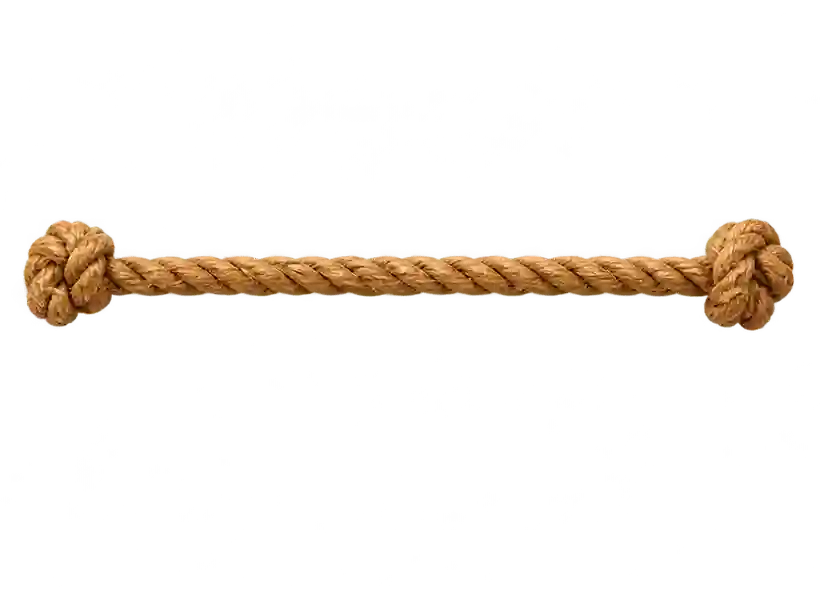
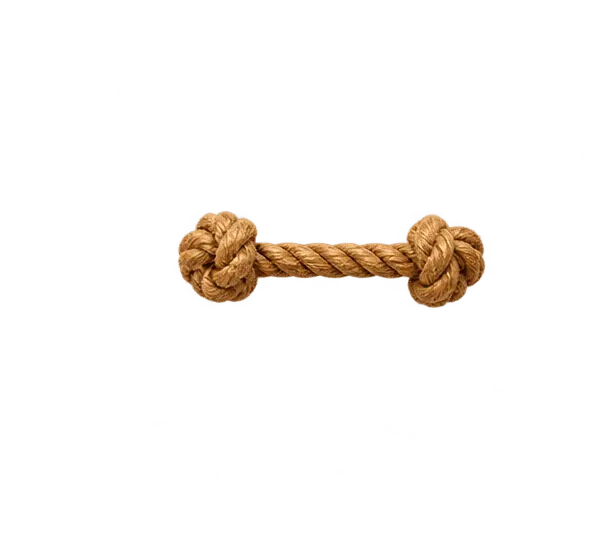
Longer and shorter are comparison words that help children describe the length of two objects. When one object extends farther from one end to the other, we say it is longer. The object that extends a smaller distance is shorter.
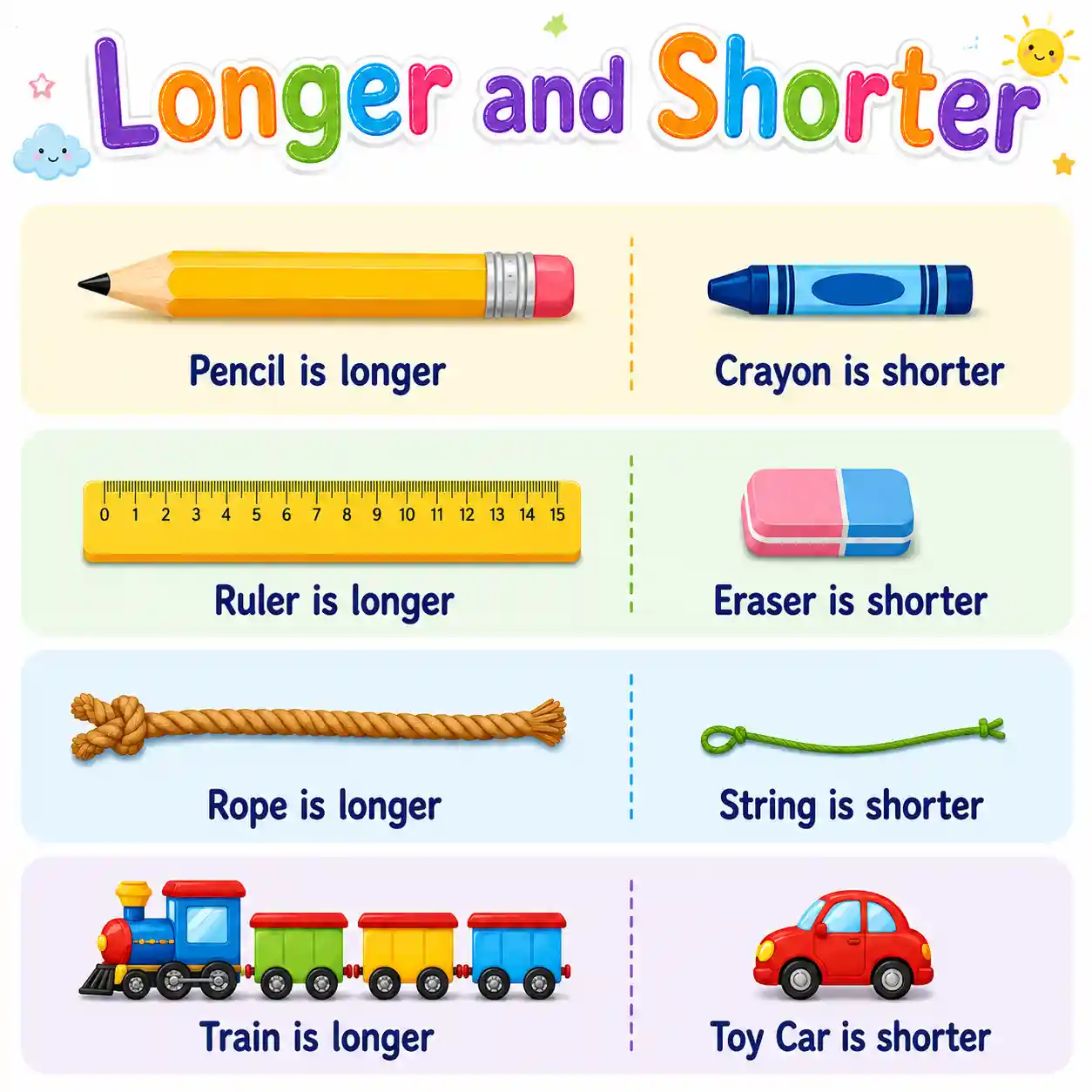
Children can understand the concept by comparing familiar objects such as pencils, crayons, ropes, ribbons, rulers, spoons, books, socks, and toy vehicles.
Longer Does Not Always Mean Bigger
Length and overall size are different ideas. An object can be long and thin while another object can be bigger overall but shorter in length. Children should focus on the distance from one end of an object to the other instead of choosing the object that simply looks bigger.
Height is also different from length. In this lesson, children compare how long objects are rather than how tall they stand.
Examples of Longer and Shorter for Kids
Familiar objects with clear differences in length make this concept easier for young children to understand.
How to Compare Longer and Shorter Objects
Children can compare length more easily when two objects are placed beside each other correctly. When possible, place both objects on a flat surface and start them from the same point.
- Look carefully at both objects.
- Place the objects side by side.
- Align one end of both objects at the same starting point.
- See which object extends farther.
- Call the object that extends farther longer.
- Call the other object shorter.
Aligning the objects from the same starting point helps children avoid being confused by their position on the page or table.
Longer and Shorter Word Bank
These useful comparison words help children describe length during mathematics activities and everyday conversations.
- Longer
- Having more length than another object.
- Shorter
- Having less length than another object.
- Long
- Extending a greater distance from one end to the other.
- Short
- Extending a smaller distance from one end to the other.
- Length
- The distance from one end of an object to the other.
- Compare
- Look at two things to notice how they are alike or different.
- End
- One of the points where an object finishes.
- Measure
- Find or compare an amount such as length, height, or weight.
What Children Will Learn in Longer and Shorter for Kids
- Understand longer and shorter as words used to compare length.
- Identify which of two familiar objects is longer or shorter.
- Use the words longer and shorter correctly in simple comparisons.
- Understand that longer does not always mean bigger.
- Learn to align objects from the same starting point before comparing.
- Develop observation, reasoning, and early measurement vocabulary.
Why Learning Longer and Shorter Is Important
Comparing length is an important early mathematics skill. When children decide which object is longer or shorter, they practise observation, mathematical vocabulary, comparison, and simple reasoning.
This early understanding prepares children for later work with rulers, measurement units, ordering objects by length, estimation, height, distance, and other measurement concepts.
How Parents Can Practise Longer and Shorter at Home
Parents can practise length comparison using familiar objects already available at home. Place two suitable objects beside each other and align one end before asking the child which one is longer.
- Compare a pencil and a crayon.
- Compare two spoons of different lengths.
- Compare a ruler and an eraser.
- Compare two ribbons or pieces of string.
- Compare two socks of different lengths.
- Ask the child to explain the answer using longer and shorter.
Keep the activity simple and playful. Encourage children to place the objects correctly and explain what they notice instead of immediately telling them the answer.
Related Pre-Number Lessons
Ready to Practise Longer and Shorter?
Try the interactive picture activity and practise comparing familiar objects by length. Complete all 12 questions to strengthen length-comparison vocabulary, observation, and early mathematical reasoning.
Start Longer and Shorter Practice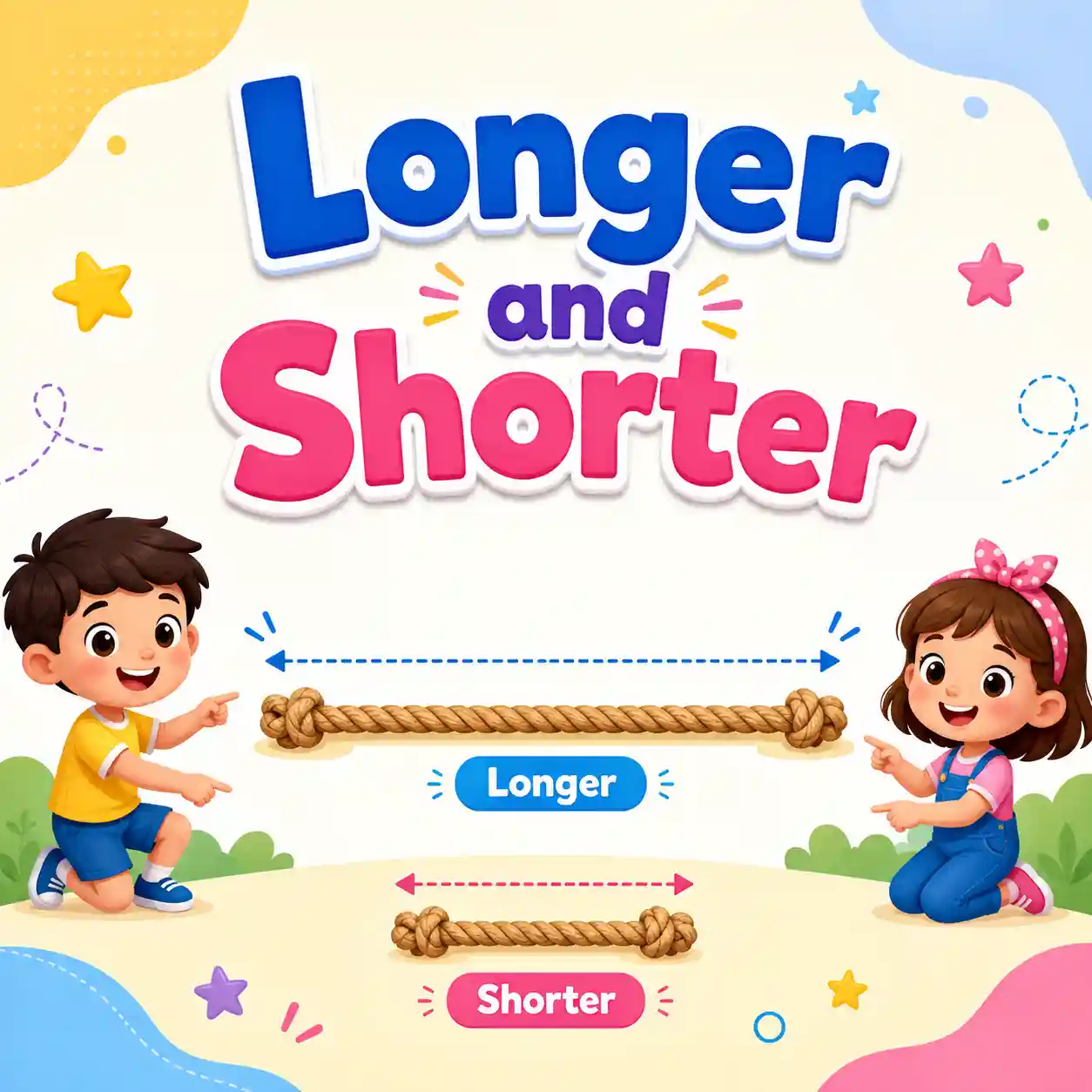
Trusted Sources for Early Learning Reference
These educational resources provide additional information about foundational learning, numeracy, and child-friendly education.
Official educational resources supporting foundational mathematics and classroom learning for children across India.
NIPUN BharatNational initiative supporting foundational literacy, numeracy, and early primary learning across India.
UNICEFGlobal guidance supporting early childhood education, development, and child-friendly learning practices.
Longer and Shorter Questions for Parents
These common questions can help parents support children while practising length comparison at home.